
Get Free Ebook Optics (4th Edition)
This factor is among some reasons that make lots of people mostly want to read this publication. It is also suggested with the higher quality of how the writer shows the description, providing instances, and also picks the dictions. Every word as well as sentence that is included in pack as a book entitled Optics (4th Edition) appears in very boosting condition. This is not only for the analysis material but additionally a god option for analysis.
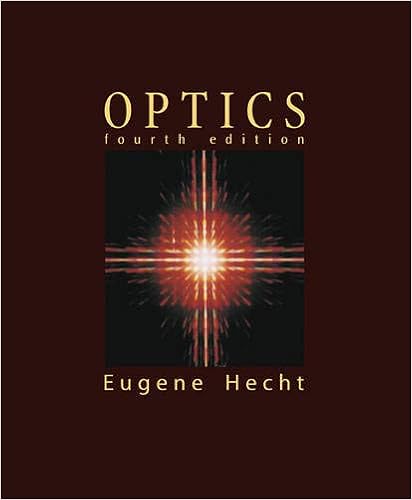
Optics (4th Edition)

Get Free Ebook Optics (4th Edition)
Why must select the headache one if there is easy? Obtain the profit by purchasing the book Optics (4th Edition) here. You will obtain various method making an offer as well as obtain the book Optics (4th Edition) As known, nowadays. Soft data of the books Optics (4th Edition) end up being very popular among the visitors. Are you one of them? And below, we are offering you the new compilation of ours, the Optics (4th Edition).
This book is offered in soft duplicate data that can be had by you. Reading fans, many people have the reading task in there early morning day. It is as the way to begin the day. Sometime, in their noontime, they will also enjoy reading the magazine. Have you started to like reading guide? Optics (4th Edition) as one of referred books can be your option to spend your time or spare time specifically. You will not should have various other pointless activities to open up or utilize the time.
So, even you require commitment from the business, you might not be perplexed any more since books Optics (4th Edition) will certainly constantly assist you. If this Optics (4th Edition) is your best companion today to cover your work or job, you could as soon as possible get this book. Exactly how? As we have actually informed previously, just check out the web link that we offer below. The verdict is not only the book Optics (4th Edition) that you hunt for; it is just how you will certainly obtain many publications to assist your ability as well as capability to have great performance.
Starting to read this publication can begin your opportunity in doing this life far better. It will certainly make you look to have even more times or more spare times in analysis. Setting aside few times in a day just for analysis can be done as one of the initiatives for you to complete your activities. When you will finish the evening before sleeping, Optics (4th Edition) is likewise a good thing to accompany you.
From the Back Cover
Accurate, authoritative and comprehensive,Optics, Fourth Editionhas been revised to provide readers with the most up-to-date coverage of optics. The market leader for over a decade, this book provides a balance of theory and instrumentation, while also including the necessary classical background. The writing style is lively and accessible.For college instructors, students, or anyone interested in optics.
Read more
Product details
Hardcover: 680 pages
Publisher: Addison-Wesley; 4 edition (August 12, 2001)
Language: English
ISBN-10: 9780805385663
ISBN-13: 978-0805385663
ASIN: 0805385665
Product Dimensions:
8.2 x 1.6 x 9.2 inches
Shipping Weight: 3.2 pounds (View shipping rates and policies)
Average Customer Review:
3.8 out of 5 stars
80 customer reviews
Amazon Best Sellers Rank:
#290,970 in Books (See Top 100 in Books)
I am not sure why this book is so popular and in use in undergraduate optics courses. Treatment is sometimes difficult to follow and frankly I can't put my finger on the reason. I guess the author is just too verbose for my tastes. The best part of this book is in the first chapter when he gives a nice history of optics.I DO however recommend his Schaum's outline Schaum's Outline of Optics which is very useful to give you practice. I prefer Fowles book Introduction to Modern Optics (Dover Books on Physics) which is at the same level although there are fewer algebra steps shown.Actually, I'd personally recommend Guenther's book Modern Optics instead of this one if you really wanted a modern dive into an old subject.
Great standalone text. Updated and relevant. I bought this for a graduate level introductory optics course despite already having the 4th edition from an undergraduate course. I struggled with the necessity of buying the new edition at first but have no regrets now. The 4th edition had hardly any example problems throughout the entire text. The author remedied this in the 5th edition. There are multiple example problems that are well discussed in each chapter on the main topics. Also, the text was reorganized a bit and of course the page numbers and homework problems are a little different than the 4th edition. When the teacher references a certain page during class or says work homework problem X, the last thing I want to do is look around and try to figure out if I am looking at the right thing.
The book is very descriptive but the style of writing isn't super easy to follow or engaging. However, what makes the book really good, in my opinion, are the figures and diagrams provided every couple of pages which are great for visual learners like me. Also, this book is packed with information and covers more than one optics class could teach. The book is not something you can casually peruse; you have to sit down and really focus to fully understand it. However, it covers practically everything you need to know on electromagnetic waves for a senior physics student. It's also worth keeping after graduating since it makes a really good reference tool.
This book has a lot of information and is generally pretty decent. However it also has a lot of fluff that isn't necessary. The derivations are nice but a lot of steps are skipped and it feels like there could be more explanation of what they're doing. The pages aren't printed correctly so there are little grey boxes (supposedly to mark equations?) in the middle of paragraphs of text. Not that great at explaining what is going on either. Could be my optics class is just poorly taught as well, I usually just use the book to pull equations out of after getting tired of reading it. So far I'm about 2/3 of the way through the book and already knew a lot of the material in geometrical optics and a few other things, and this book just managed to confuse me. I knew what was going on and the book just does not explain it well at all.
I'm a physical chemical student who works closely with optics, recently found myself lacking some knowledge in optics, so I purchased this book followed by a post-doc's advice.The content is clear and precise, easy to understand, a nice and worthy book for a junior non-physical majored scholar.
The book is alright. Most of the info that you want to know for intro optics is in this book (4/5 for that part), but the presentation is pretty poorly executed (2/5, in my opinion). This book is just way too verbose, and not in a good way. The extra paragraphs don't really contribute much to the understanding of the underlying physics. The book can probably be cut in size by a large amount. There are so many paragraphs that can be removed without loss of continuity of the actual physics going on.What I mean is, Hecht gets side tracked too much. It's like this: I start talking about the double-slit experiment. Then I remember guy A did something on it, so start talking about the brief history about that. Then I remember that guy A wrote a letter on the material. So I talk about that letter and insert an excerpt from it. Then I also insert a letter from guy A to guy B in the field. So let's talk about that, too. (I'm over exaggerating a bit, but that's how it feels when you read read this book.)All the people that I talked to in my optics class thought the same thing. For a reader who just wants the physics and not the trivia and numerous paragraphs on really, really minor details, this book is a displeasure to read. I think the book is a course textbook + encyclopedia hybrid. It is not as concise as a well-written course textbook, but also not as detailed as as full-blown encyclopedia. It is neither here nor there.I feel like the book is written for the stereotypical whiny student who, when sitting in the class goes, "But teacher, why do I need to learn this? This is so pointless. When will I ever even use this in real life?" So Hecht inserts many examples to convince you that "See, this physics is actually used in real life!" Examples are good, but when you throw in too many examples you increase the length of the chapters without adding much foundational understanding of the physics.Use the book to get the essential physics that is sprinkled in the chapters, but learn how to skip the parts that are random facts and the book will work fine.
Optics (4th Edition) PDF
Optics (4th Edition) EPub
Optics (4th Edition) Doc
Optics (4th Edition) iBooks
Optics (4th Edition) rtf
Optics (4th Edition) Mobipocket
Optics (4th Edition) Kindle
0 comments:
Post a Comment